 Request a consultation
About the surgeon
Dr. Mustafa Bağlı
Rhinoplasty and Facial Plastic Surgeon in Istanbul
A photograph can show me the shape of your nose. It can’t tell me how easily you breathe through it or which features you hope to keep.
Meet Dr. Bağlı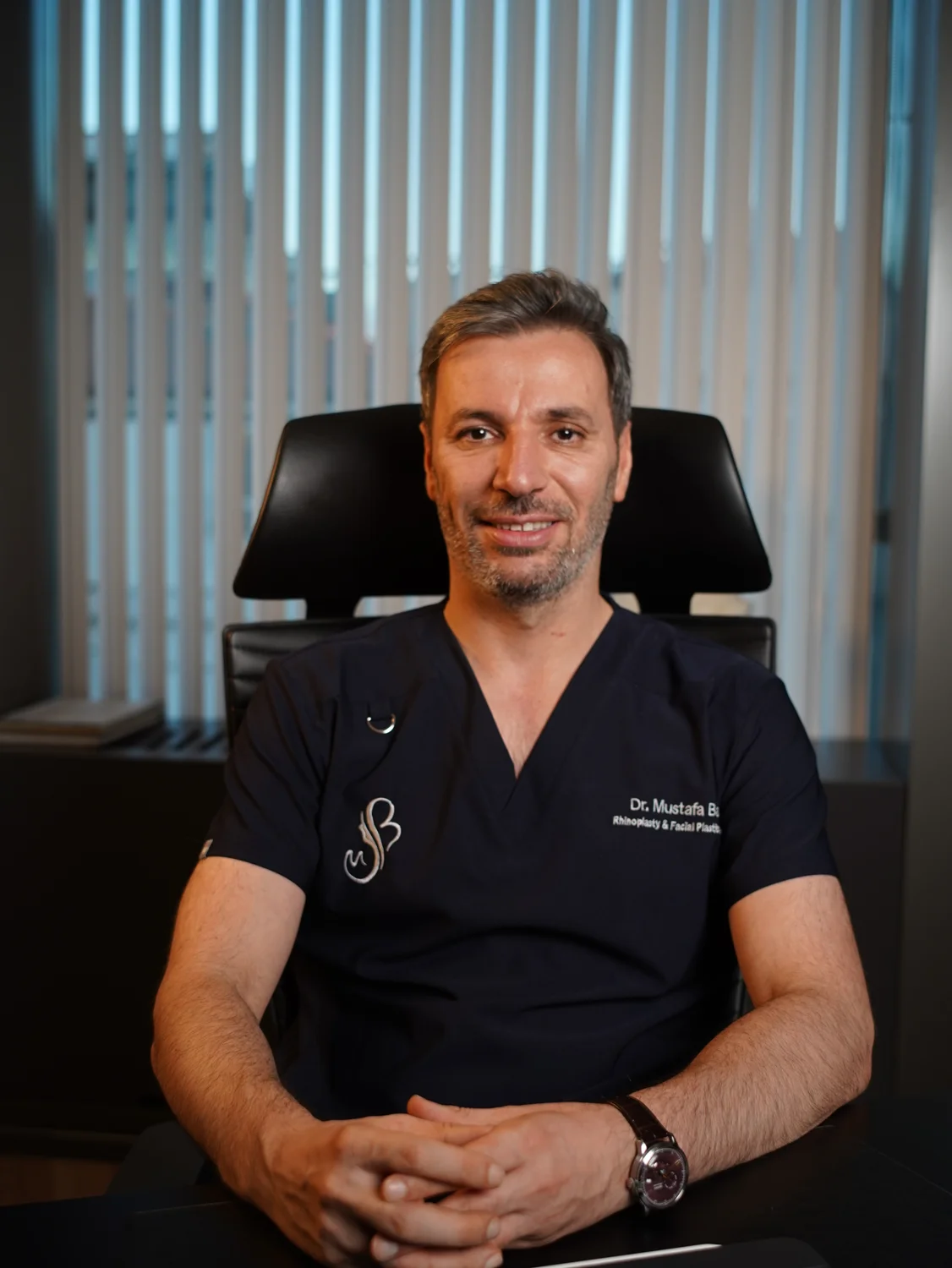





My background
Why I chose this work
My interest in rhinoplasty began during my ear, nose and throat training in Istanbul. In a department that cared for both nasal health and appearance, I became interested in how a change to the nose could affect what a patient sees in the mirror and what they experience each day.
That is why I want to hear what you like about your face as well as what you hope to change. You may want a softer profile and still want to see a family resemblance. Those two wishes belong in the same conversation.
In my own words
Which features would you want to recognise in your face after surgery? In this short video on ethnic rhinoplasty, Dr. Bağlı explains how a patient’s facial proportions and personal preferences shape what he recommends.
Watch Dr. Bağlı on preserving individual features · YouTube · 3 min 9 sec
My practice
What brings you here?
Considering your first rhinoplasty
What do you notice first in a photograph? Is there something you particularly want to preserve? We can talk about your profile, the front view and how you breathe.
Explore rhinoplastyQuestions after nasal surgery
It helps to know when your earlier surgery took place, what changed and what still concerns you. Your priorities now may be different from the ones you had before.
Explore revision rhinoplastyConsidering facial plastic surgery
You might describe your upper eyelids as looking heavy, or notice a change around your brows. Start by showing me where you see it. The examination gives us a basis for discussing your options.
Explore facial plastic surgeryTraining & credentials
My qualifications
My ENT training gives me a reason to ask about breathing even when the concern that brought you in is a change in shape. My facial plastic surgery training also informs how I look at the nose in relation to the rest of the face.
My board certifications- 2011
- Medical degree Istanbul University, Istanbul Faculty of Medicine View medical diploma (Tıp Hekimliği Diploması)
- 2016
- ENT specialist qualification Şişli Hamidiye Etfal Training and Research Hospital, Istanbul View ENT specialist certificate (Uzmanlık Belgesi)
European ENT fellowship
Fellow of the European Board of Otorhinolaryngology, Head and Neck Surgery.
European facial plastic surgery board certification
Diplomate in Facial Plastic and Reconstructive and Aesthetic Surgery. Issued by the European Board for Examination and Certification in Facial Plastic and Reconstructive Surgery.
International health tourism authorisation
This certificate is held by the practice.
Professional CV, teaching and publications
[Clinic to supply the approved full CV and links to any verified teaching or publications.]
Clinical decisions
Three decisions from my practice
A case is easier to understand when you know what the patient wanted, what the examination showed and why a particular course was chosen.
[Case layouts for review. The clinic will select consented records and confirm each outcome and follow-up interval.]
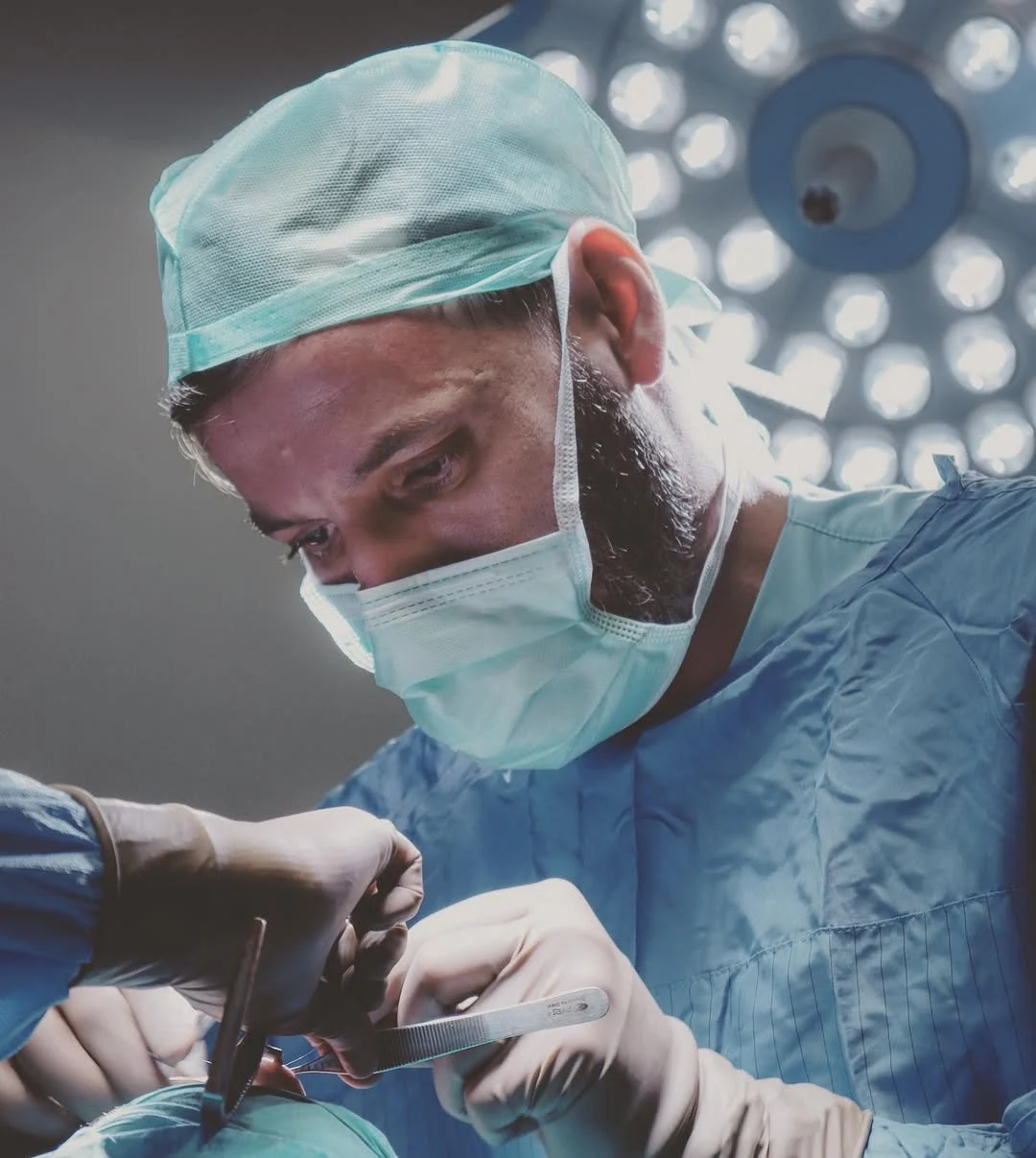
Preserving a feature in a first rhinoplasty
- Patient’s priority
- [What the patient hoped to change and the feature they wanted to keep.]
- Assessment and recommendation
- [Which finding shaped the plan and why preserving that feature mattered.]
- At follow-up
- [Documented observation, patient perspective and actual interval.]
Deciding on the next step after nasal surgery
- Patient’s priority
- [What changed after the earlier operation and what still concerned the patient.]
- Assessment and recommendation
- [What the assessment clarified and why review, waiting or revision was recommended.]
- At follow-up
- [What was reassessed, when and what was documented.]
Understanding a concern around the eyes
- Patient’s priority
- [How the patient described the concern in their own words.]
- Assessment and recommendation
- [What the eyelid and brow assessment showed and how that informed the recommendation.]
- At follow-up
- [Documented outcome and time since assessment or treatment.]
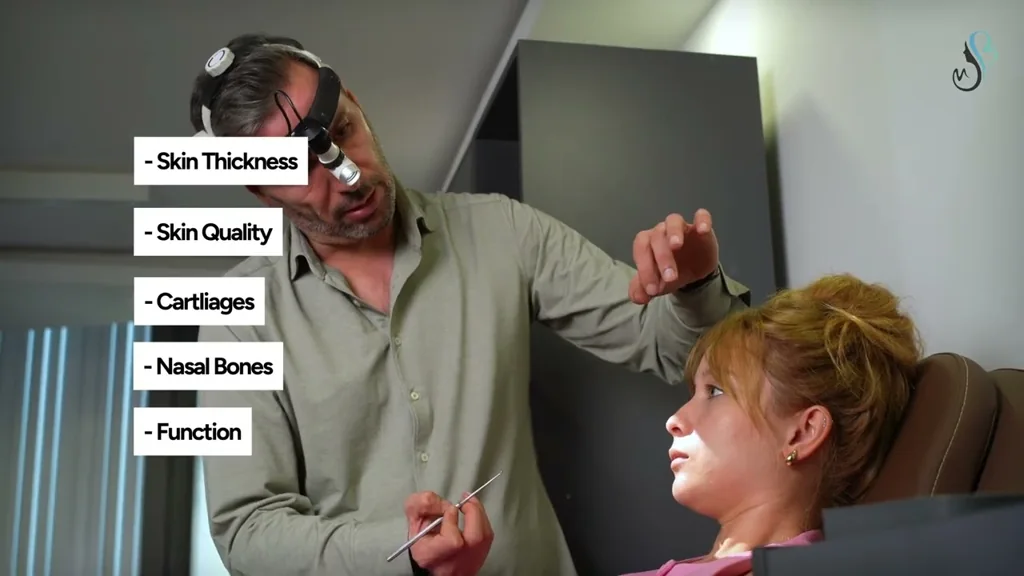
One useful question to bring to a consultation is “What would make you advise me to wait?” If the change you hope for is difficult to define, we can spend time clarifying it. If another assessment would help us make a decision, we can discuss what that assessment could tell us.
In this recording I discuss who I decline to operate on.
Who I decline to operate on · YouTubeInternational patients
Your care in Istanbul and at home
Where we meet
My consulting rooms are on Rumeli Caddesi in Şişli, Istanbul.
Halaskargazi, Rumeli Cd. No. 71, Floor 734363 Şişli, Istanbul, Türkiye Clinic contact details
Practice authorisation
The Ministry of Health issued the International Health Tourism Authorisation Certificate to Dr. Mustafa Bağlı’s private practice.
View the authorisation certificate
Uluslararası Sağlık Turizmi Yetki Belgesi
Before you travel
You’ll already be in touch with your medical advisor before you travel to Istanbul. Your advisor will coordinate your appointments with Dr. Bağlı and the clinic team, explain what to bring and go through the arrangements with you. If a question comes up while you’re planning your trip, you’ll know who to contact.
What can I confirm before I book my travel to Istanbul?
Before booking flights or accommodation, you can review your proposed dates with your medical advisor. They’ll explain where your consultation will take place, whether your operating facility has been confirmed, and any details that are still being arranged. That gives you a clearer basis for making your travel plans.
After you return home
Your medical advisor will stay in touch after you return home and throughout your recovery, until healing is complete. If you have a question about how you’re healing, contact your advisor. When a concern needs Dr. Bağlı’s assessment, your advisor can arrange for you to speak with him directly.
Bring the question that led you here, even if you haven’t decided on a procedure. It can help to write down one change you hope for, one feature you want to preserve and anything about recovery that could affect your plans.
We can discuss your history, what an examination can clarify, the limits and risks of the options available, and what you would like time to consider.
What if I have had surgery before?
Tell your medical advisor when your operation took place and what concerns you now. If you have records or photographs from your previous surgery, your advisor will let you know which ones would be useful for Dr. Bağlı to review and how to share them.
How do I share photographs?
Start by requesting a consultation and telling us what you would like to discuss. Your medical advisor will explain which photographs would help Dr. Bağlı understand your concern, which angles to capture and how to send them. You can wait for those instructions before taking any photos.
When will I know how much time to allow and what it will cost?
The time you’ll need and the cost depend on the procedure you’re considering. After your evaluation and consultation with Dr. Bağlı, your medical advisor will explain the expected timing and cost of the proposed treatment so you can decide whether to go ahead.
If you’re asking about the first consultation itself, you can ask your advisor how long to set aside and whether a consultation fee applies when arranging the appointment.
Request a consultation
What would you like to discuss?
Tell us what you’re considering and how you’d prefer to hear from us. Your assigned medical advisor will reply and explain how to arrange your first conversation with me.